This article demystifies how to play Go, a classic strategic board game often seen as complex but truly rewarding. Many gamers today seek engaging experiences that balance skill-building and relaxation, fitting into busy lives. Go offers exactly that a deep tactical challenge that can be learned in minutes but mastered over a lifetime. We will explore the fundamental rules of Go, from placing stones to capturing territory and understanding scoring. Whether you are a casual player looking for a new pastime or a seasoned strategist seeking a fresh challenge, understanding the core mechanics of Go is your first step. Discover why Go continues to captivate players globally, providing endless opportunities for mental stimulation and competitive fun. This guide aims to equip you with the knowledge to start playing confidently and enjoy the timeless appeal of this ancient game. Forget confusing setups and overwhelming rulebooks; this breakdown makes learning Go accessible for everyone. Get ready to dive into the elegant simplicity and profound depth of the Go board.
How do you play Go board game as a complete beginner?
Learning how to play Go board game starts with understanding its simple objective: surround more territory than your opponent on the grid. Players take turns placing black or white stones on the intersections of the lines. It's a game of strategic placement, territorial control, and capturing enemy stones. Think of it as painting portions of the board with your color.
What are the fundamental rules for placing stones in Go?
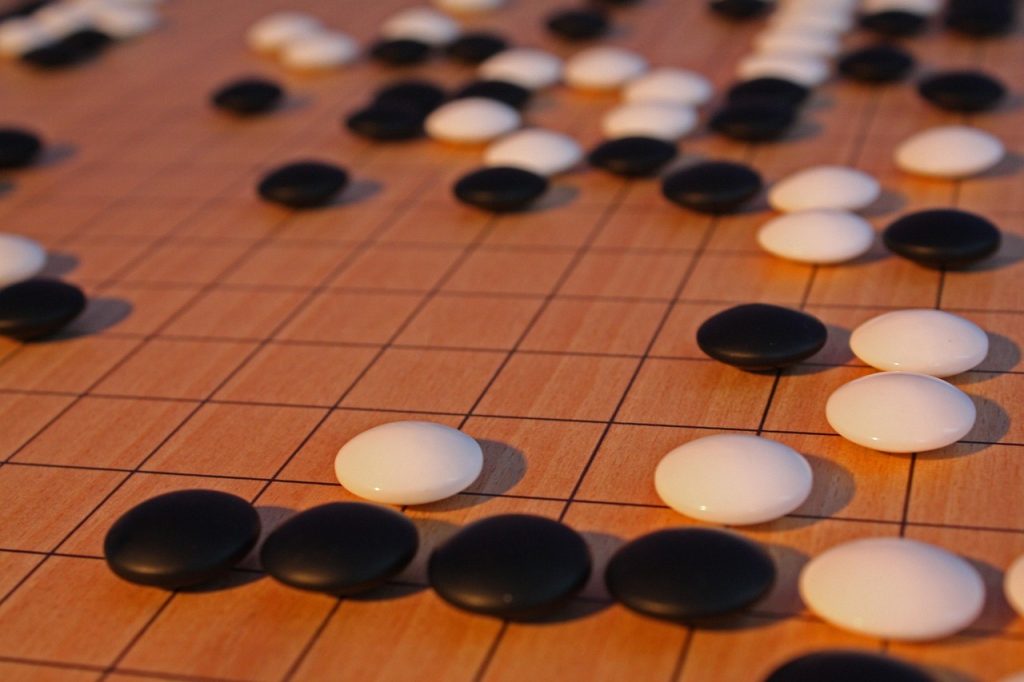
When you play Go, you place one stone per turn on an empty intersection. Once placed, stones typically do not move. The only way a stone or group of stones leaves the board is by being captured. Surrounding opponents' stones and creating secure "eyes" for your own groups are key mechanics. No self-capture or placing stones into suicide positions is allowed.
How does the concept of "liberties" impact gameplay in Go?
Liberties are the empty adjacent intersections around a stone or a group of connected stones. To capture enemy stones, you must occupy all of their liberties. Conversely, to keep your own stones safe, you must maintain at least one liberty. Understanding and managing liberties is crucial for both offense and defense, as it dictates the life and death of stone groups when you play Go board game.
What is "territory" in Go and how is it scored to determine the winner?
Territory in Go refers to the empty intersections completely enclosed by one player's stones. The primary goal is to claim as much of this empty space as possible. When the game ends, after both players pass consecutively, the winner is determined by counting the total occupied territory plus any captured enemy stones. Knowing how to play Go involves mastering this territorial struggle.
Are there specific opening strategies or principles for new Go players?
For new players figuring out how to play Go board game, focus on occupying corners first, then sides, and finally the center. Corners are easier to enclose for territory. Also, try to keep your stones connected to form strong groups that are harder to capture, and extend outwards to influence more of the board. Don't worry too much about complex tactics initially; learn the basics of connection and extension.
How can I practice Go and improve my skills without endless hours of play?
To improve your Go skills efficiently, consider playing short online games against AI or other beginners. Many apps and websites offer daily problems (Tsumego) which focus on life and death scenarios. Reviewing your own games, even short ones, can highlight mistakes. Remember, consistent short bursts of practice are often more effective for busy gamers than infrequent long sessions when learning how to play Go board game.
What are some common misconceptions about learning how to play Go board game?
A common misconception is that Go is overly complex or only for geniuses. While it has profound depth, the basic rules of how to play Go board game are simpler than chess. Another myth is that you need a physical board to learn; digital versions and interactive tutorials are excellent starting points for modern gamers who are short on time. It's an accessible game with a high skill ceiling.
Hey fellow gamers! Ever find yourself scrolling through endless game libraries, looking for something genuinely engaging, challenging, yet also incredibly relaxing? Something that fits neatly into your busy schedule, offering a mental workout without demanding countless hours of grinding? You are not alone. In today's gaming landscape, where 87% of US gamers play regularly, often balancing careers and families, finding that sweet spot is key. We love our high-octane shooters and sprawling RPGs, but sometimes, the brain craves a different kind of challenge, something timeless and profound. This month, many are rediscovering the enduring appeal of classic strategy games. That's where Go, the ancient board game of strategy and territory, comes in. Often perceived as intimidating, learning how to play Go board game is surprisingly straightforward, offering depth that can captivate you for years without the need for constant updates or expensive hardware.
Forget the hype cycles and the pressure to keep up with every new release. Go offers a timeless, pure strategic experience. It is a game where every move counts, every decision shapes the board, and every victory feels earned through sheer wit. This guide is your no-nonsense pathway to understanding the fundamentals of how do you play Go board game. We will demystify its rules, tackle common beginner pain points, and provide practical tips so you can start playing and enjoying this incredible game. Whether you are looking for a new way to unwind, sharpen your mind, or connect with a vibrant community, Go offers immense value. Let's dive in and unlock the elegance of the Go board together.
What is the Go board game and why is it popular with modern gamers?
Go, known as Weiqi in China and Baduk in Korea, is an abstract strategy board game for two players. It originated in China over 2,500 years ago, making it one of the oldest games continuously played today. The game involves placing black and white stones on a grid of lines, aiming to surround more empty territory and capture more enemy stones than your opponent. It is characterized by its simple rules, yet profound strategic complexity.
For modern gamers, especially those around the average age of 36 who balance life with gaming, Go offers a unique appeal. It provides a deep intellectual challenge without the need for complex setups or significant time investment in learning intricate mechanics, unlike some modern titles. Its turn-based nature allows for thoughtful play, making it a perfect game for relaxation and skill-building after a long day. Many gamers appreciate its 'easy to learn, difficult to master' philosophy, aligning with the desire for games that offer long-term engagement and personal growth. The social aspect also resonates, as playing Go online or with friends can be a deeply rewarding experience, fitting into the trend of social gaming and community engagement that dominates platforms like Discord.
How do you set up the Go board and start playing?
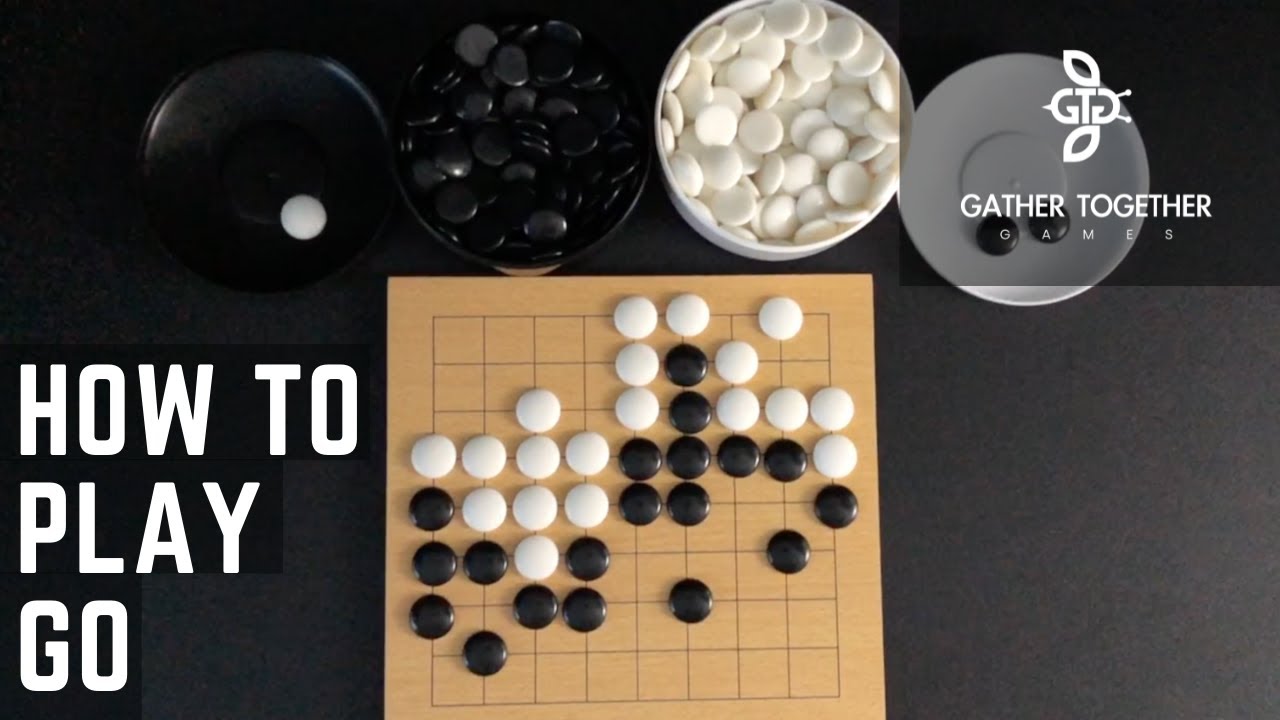
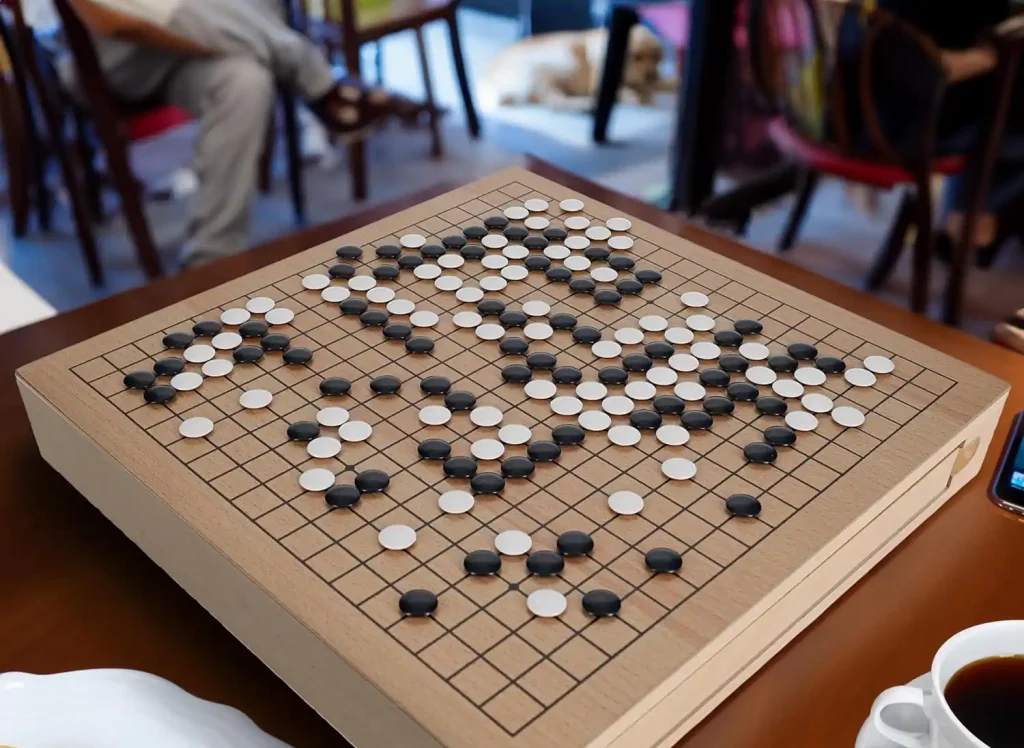
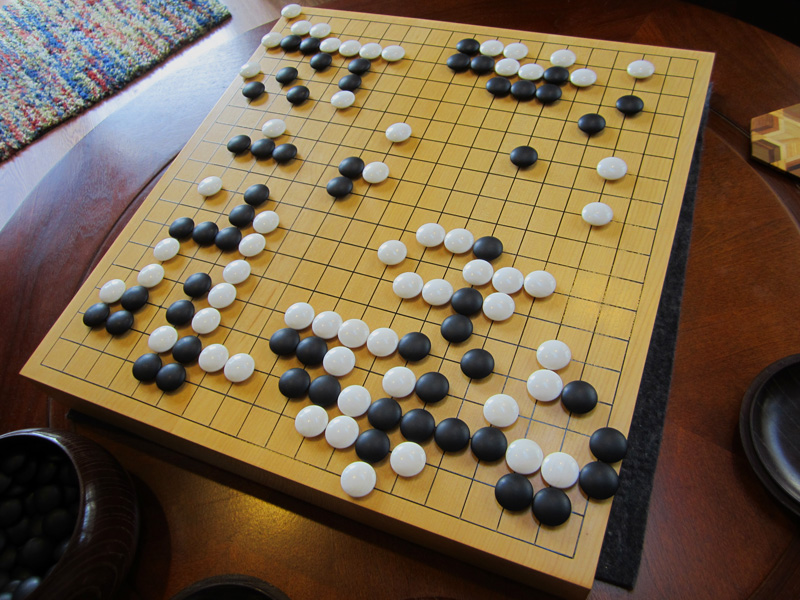
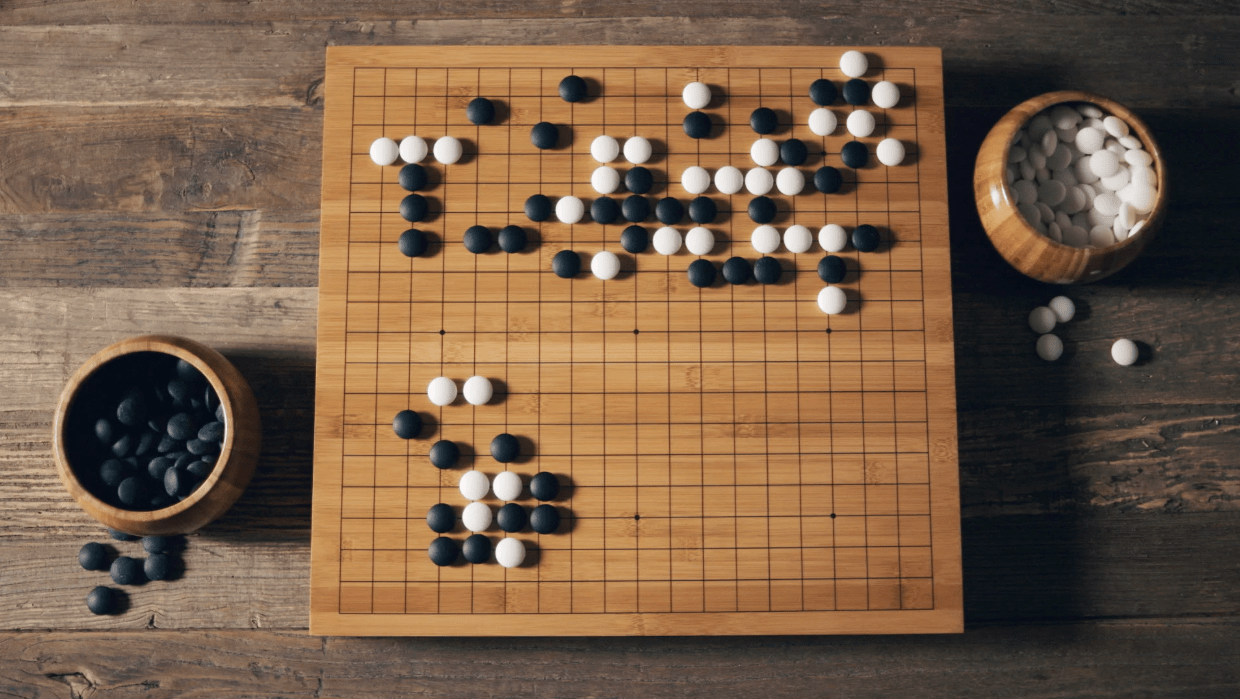
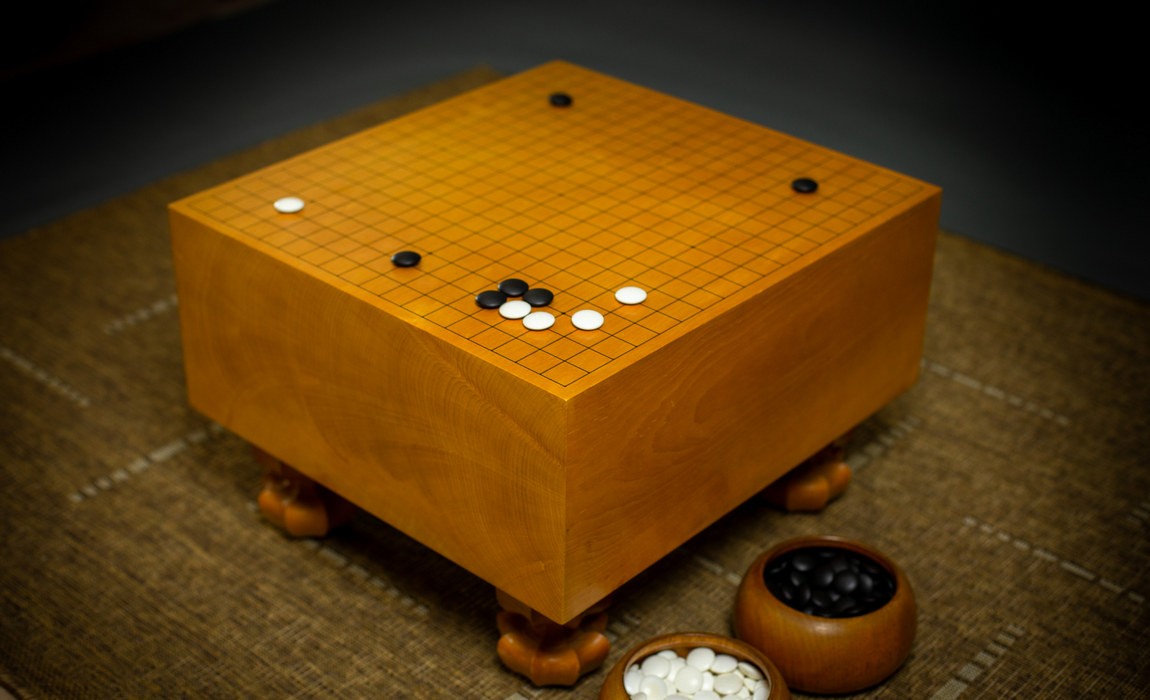
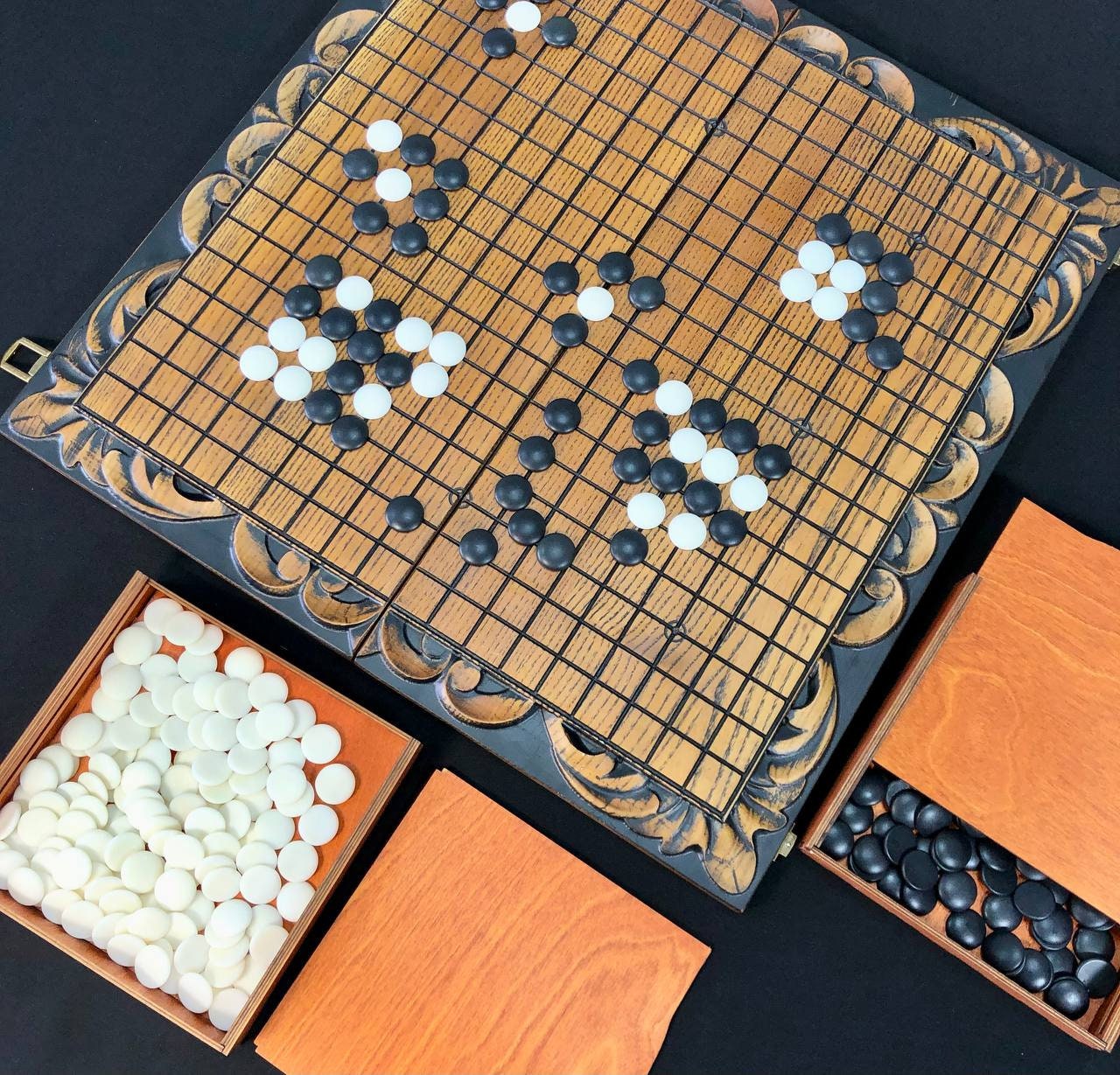
Setting up the Go board is remarkably simple, especially when compared to many modern games with extensive tutorials. You will need a Go board, typically a grid of 19x19 lines (though smaller 9x9 or 13x13 boards are excellent for beginners), and a set of black and white stones, usually around 180 of each color, stored in bowls. The game always begins on an empty board.
To start playing Go board game:
- Choose who plays Black and who plays White. Black typically places the first stone.
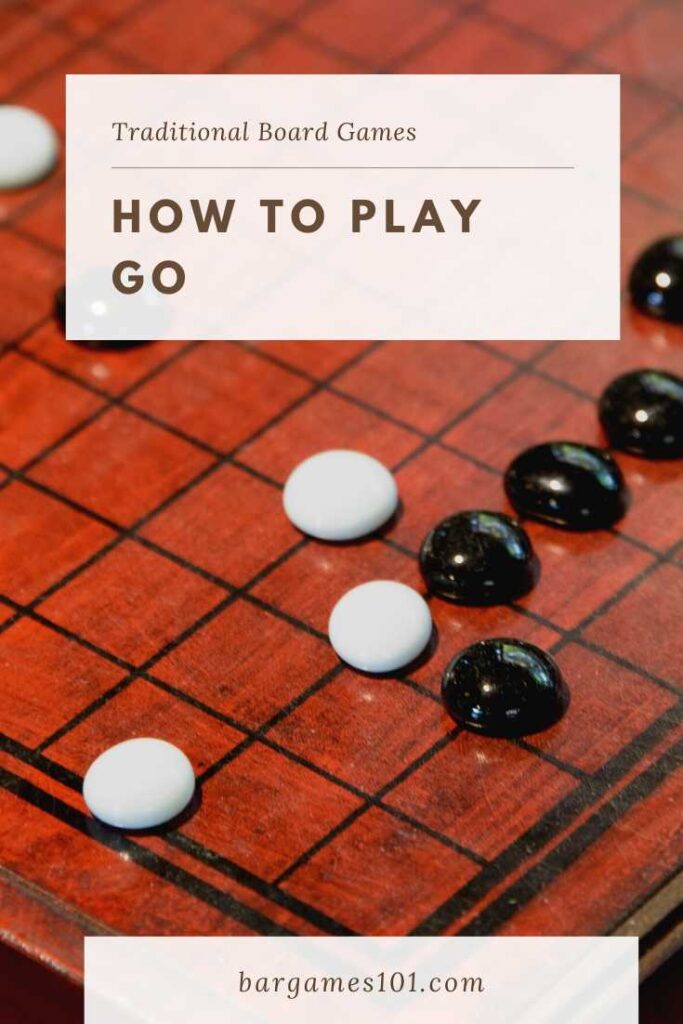
- Players take turns placing one stone of their color on any empty intersection of the grid lines. Stones are not placed within the squares but on the points where the lines cross.
- Once placed, a stone cannot be moved. Its position is fixed until it is captured or the game ends.
- The objective is to surround territory (empty intersections) and capture opponent's stones.
This minimalist setup ensures you can get straight into the strategic thinking without any pre-game fuss, addressing a common pain point for busy gamers who value efficiency and immediate engagement.
What are the fundamental rules for placing stones in Go?
The core of how do you play Go board game revolves around stone placement and understanding 'liberties.' A liberty is an empty adjacent intersection to a stone or a group of connected stones. Think of them as breathing holes.
Here are the fundamental rules for placement:
- One Stone Per Turn: Each player places exactly one stone on an empty intersection during their turn.
- No Moving Stones: Once placed, a stone cannot be moved to another intersection.
- Connecting Stones: Stones of the same color that are on adjacent intersections (horizontally or vertically, not diagonally) are considered connected and form a 'group.' These groups share liberties.
- No Suicide Moves: You cannot place a stone if it immediately results in that stone or its entire group having no liberties remaining (a 'suicide' move), unless that move simultaneously captures one or more of your opponent's stones. This rule is crucial for understanding capture mechanics.
These simple rules create an astonishingly deep game, where the strategic implications of each placement ripple across the entire board. Mastering these basics is the bedrock of learning how to play Go board game effectively.
How does capturing work in the game of Go?
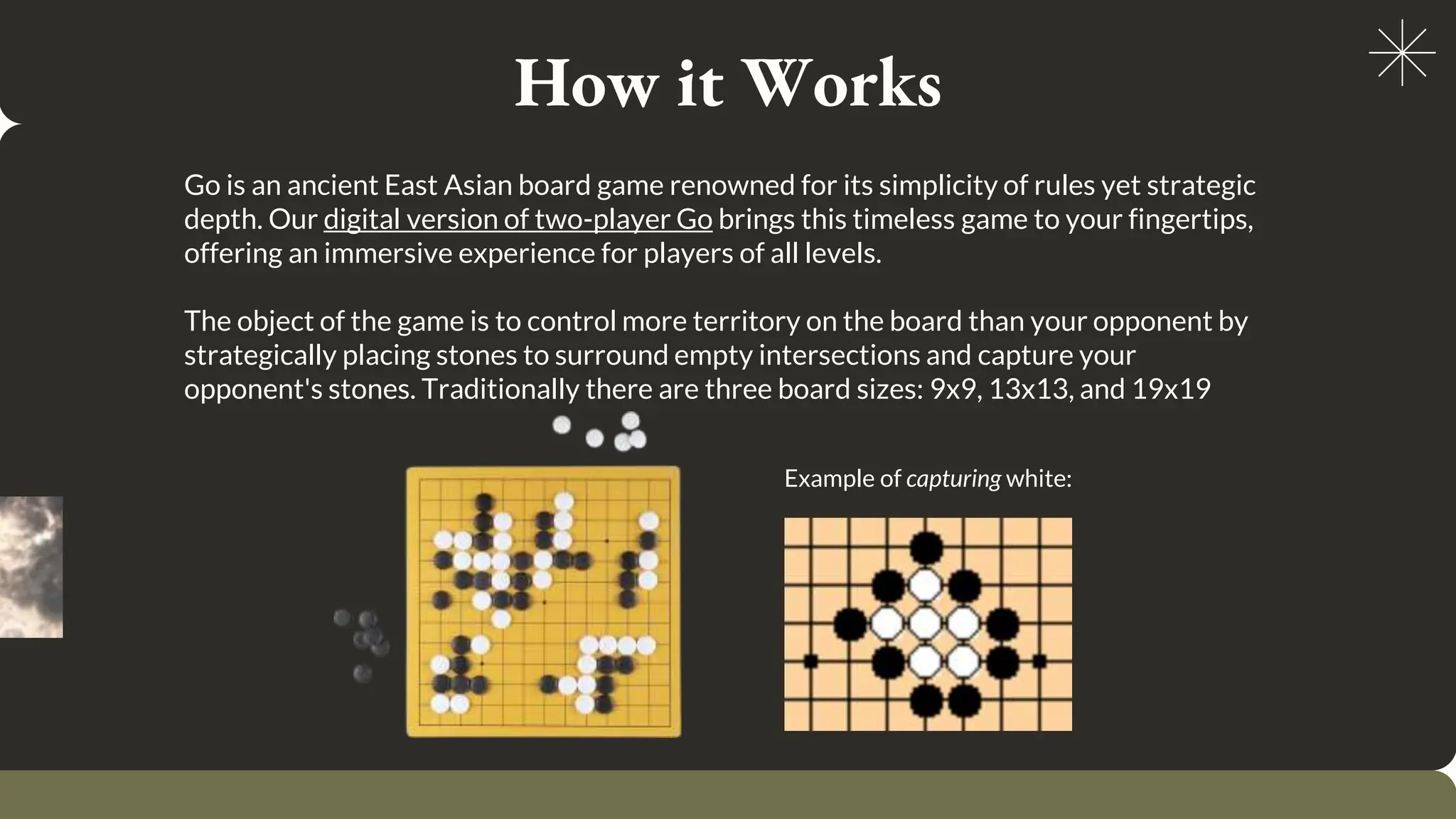
Capturing is one of the most exciting and crucial mechanics when you play Go board game. A stone or a group of stones is captured when all of its liberties are occupied by opponent's stones. When a stone or group is captured, it is removed from the board.
Consider these points for capturing:
- Surrounding: To capture an opponent's stone, you must completely surround it with your own stones. This means occupying all its adjacent empty intersections (liberties).
- Groups: If multiple stones of the same color are connected, they form a group. To capture a group, all its shared liberties must be occupied. Capturing a single stone vs. a large group follows the same principle.
- Atari: When a stone or group has only one liberty left, it is said to be in 'atari.' The next move that occupies that last liberty will capture the stone or group. Announcing 'atari' is common etiquette, especially for beginners.
- Ko Rule: There's a special rule called 'Ko' (meaning 'eternity' or 'calamity') to prevent infinite loops of capture and recapture. If a capture results in the board returning to an identical position that existed one move earlier, the player whose turn it is cannot immediately recapture. They must make a move elsewhere on the board first. This ensures dynamic gameplay and prevents stalemates.
Understanding and executing captures efficiently is a core component of how do you play Go board game, as it directly impacts both territory and the balance of power on the board.
What is 'territory' in Go and how do you claim it?
Territory is the primary objective in Go. It refers to the empty intersections on the board that are completely enclosed by one player's stones. The player who surrounds more territory wins the game.
Claiming territory involves:
- Enclosure: You claim territory by forming a wall or boundary with your stones that completely encloses empty points. These empty points become your territory.
- Eyes: Within your territory, sometimes you will create small empty spaces, typically one or two points, that are entirely surrounded by your own stones and cannot be invaded by the opponent without immediately being captured. These are called 'eyes.' A group with at least two separate eyes is considered 'alive' and cannot be captured, even if all its external liberties are filled. This is a critical concept for survival.
- Borders: Territory is often formed along the edges and corners of the board, as these areas require fewer stones to enclose due to the existing board boundary.
- Reducing Opponent's Territory: Just as important as claiming your own territory is preventing your opponent from claiming theirs, or even reducing their established territory through strategic invasions or reductions.
The interplay between claiming territory and capturing stones defines the dynamic strategy of how do you play Go board game, demanding both offensive and defensive thinking.
How do you play Go board game to win and what are the scoring rules?
The goal when you play Go board game is to accumulate more points than your opponent. Points are typically tallied at the end of the game, though different scoring methods exist. The most common methods are 'territory scoring' and 'area scoring.'
The game concludes when both players agree that no more useful moves can be made, or when both players 'pass' consecutively. Passing means a player chooses not to make a move, indicating they believe further moves would be detrimental or pointless. Once the game ends, scoring begins:
Territory Scoring (Japanese Rules):
- Count all empty intersections within your completely enclosed territory.
- Add the number of opponent's stones you have captured.
- Subtract any of your own stones captured by the opponent.
- The player with the higher total wins.
- To compensate Black for the first-move advantage, White typically receives 'komi' (a bonus of 5.5 to 7.5 points) at the end of the game.
Area Scoring (Chinese Rules):
- Count all empty intersections within your completely enclosed territory AND all your stones remaining on the board.
- Captured stones do not directly add points but affect the total number of stones on the board for the opponent.
- Again, Komi is applied for White.
Both scoring systems generally lead to the same winner, but understanding them helps clarify the ultimate objective. For beginners, focusing on simply surrounding more empty space and capturing visible groups is sufficient to grasp the winning condition when learning how to play Go board game.
Are there specific strategies a beginner should know when learning Go?
Absolutely! While Go's depth can be overwhelming, a few beginner strategies will significantly improve your game and understanding of how to play Go board game.
- Corners First, Then Sides, Then Center: The corners are the easiest places to build secure territory because the edges of the board act as natural walls. After corners, focus on the sides, and finally, extend towards the expansive center.
- Connect Your Stones: Try to keep your stones connected whenever possible. Connected stones form strong groups that are harder for your opponent to capture. Loose, disconnected stones are vulnerable.
- Extend Your Influence: Do not just place stones defensively. Try to place stones that expand your potential territory or threaten your opponent's groups. Aim for a balance between creating territory and preventing your opponent from doing the same.
- Watch Your Liberties: Always be mindful of the liberties of your own stones and your opponent's. If your stones are down to two liberties, consider adding another stone to give them more breathing room. If an opponent's group has few liberties, look for opportunities to capture it.
- Avoid Passive Play: Do not just react to your opponent's moves. Try to have a plan and proactively create your own territory or attack their weak points.
These initial strategies will help you develop a foundational understanding and make your games more meaningful as you master how do you play Go board game.
How can busy gamers integrate Go into their lifestyle?
For gamers juggling jobs, families, and other life commitments, finding time for deep strategy games can be a challenge. However, Go is surprisingly adaptable to a busy lifestyle, fitting into the same niches as mobile gaming (a dominant trend, with over 80% of US gamers playing on mobile). Learning how to play Go board game doesn't have to be a huge time sink.
Here are some tips for integration:
- Online Platforms: Websites like OGS (Online Go Server) or standalone apps like GoQuest allow for rapid games against players worldwide or AI. You can often play 9x9 games in 5-10 minutes.
- Asynchronous Play: Many online platforms support 'correspondence' Go, where players take turns over hours or days, making it perfect for fitting a few moves into breaks throughout your day.
- Puzzle Solving (Tsumego): Short Go problems (Tsumego) focus on specific tactical situations like life-and-death or capturing. These can be done in minutes on a phone or tablet and are incredibly effective for skill-building.
- Social Go: Join online Go communities on Discord or local Go clubs. The social aspect of learning and playing with friends offers relaxation and skill-building without the high-pressure environment of some competitive titles.
- Budget-Friendly: Go is a fantastic value. Once you have a board and stones (or a free online account), there are no ongoing costs, in-game purchases, or constant hardware upgrade demands, addressing a common financial pain point for many gamers.
Go offers a sustainable, mentally stimulating hobby that respects your time and budget, aligning perfectly with the modern gamer's needs.
What are some common mistakes new players make in Go and how to avoid them?
When you are learning how to play Go board game, making mistakes is part of the process. Identifying them early helps speed up your improvement.
Common mistakes include:
- Playing Too Close to Your Opponent: New players often place stones right next to enemy stones unnecessarily, which can lead to your stones being captured or creating weak groups. Give your stones space, and focus on securing your own territory first.
- Ignoring Liberties: Failing to count liberties can lead to unexpected captures. Always check how many liberties your stones and opponent's stones have, especially when a group is in atari.
- Building 'Dead' Territory: Sometimes players enclose territory that is too small or easily invaded by the opponent. Ensure your enclosed areas are truly secure and defensible, particularly by forming two eyes for your groups to guarantee their life.
- Not Connecting Your Stones: As mentioned, disconnected stones are weak. Beginners often spread their stones too thinly across the board. Prioritize connecting your stones to form robust, living groups.
- Playing Pointlessly After the Game is Decided: Once there are no more significant moves that change territory or captures, many beginners continue playing. Learning when to pass is a skill. Trust your judgment when the board feels 'finished' and agree to end the game.
- Fear of Invasion: While it is important to defend your territory, do not be afraid to invade your opponent's potential territory if you see an opportunity to reduce their score or create a living group. This balance is key to mastering how to play Go board game.
By being aware of these pitfalls, you can navigate your early games more effectively and build a stronger foundation for strategic play.
Where can I find resources to improve my Go game online?
The Go community is incredibly vibrant and welcoming, with a wealth of online resources perfect for beginners and seasoned players alike. Whether you are aiming for casual improvement or diving deep into tactics, there's something for everyone learning how to play Go board game.
Here are some excellent resources:
- Online Go Servers (OGS): Platforms like the Online Go Server (online-go.com) offer free play, tutorials, puzzles, and a friendly community. You can play against AI, live opponents, or in correspondence games.
- Go Magic (gomagic.org): A newer resource that provides structured lessons and interactive exercises, often praised for its beginner-friendly approach.
- YouTube Channels: Channels like 'Dwyrin's Basics' or 'Go Pro Yeonwoo' offer extensive video tutorials, game reviews, and strategic insights. Watching actual gameplay and explanations can be incredibly helpful for visual learners.
- Tsumego Apps: Search your app store for 'Tsumego' or 'Go puzzles.' These apps provide daily challenges that focus on life-and-death situations, a fundamental aspect of Go.
- Sensei's Library (senseis.xmp.net): A comprehensive wiki for Go players, covering almost every concept, opening, and strategic principle imaginable. It is an excellent reference for deeper dives.
- Discord Communities: Many Go clubs and online servers have Discord channels where you can find opponents, ask questions, and discuss strategies with other enthusiasts. This taps into the strong social gaming trend among US gamers.
Leveraging these resources will significantly accelerate your learning curve and deepen your appreciation for how do you play Go board game.
So, there you have it: a comprehensive guide to understanding how do you play Go board game. It is a game that perfectly embodies the balance many of us gamers seek: deep strategy, endless replayability, and a sense of calm focus. It respects your time, stimulates your mind, and offers a refreshing alternative to the often frantic pace of modern gaming. Whether you jump into a quick 9x9 game online or settle in for a thoughtful 19x19 match with a friend, Go provides an enriching experience that continues to challenge and delight players across generations. What is your biggest gaming challenge when it comes to learning new strategy games? Comment below and share your thoughts!
FAQ Section
Is Go harder than Chess?
Go is generally considered easier to learn the basic rules than chess, but far more difficult to master due to its vast number of possible moves and strategic depth. The elegance lies in its simple rules creating profound complexity.
Can I play Go online with friends?
Yes, absolutely! Platforms like the Online Go Server (OGS) and various mobile apps allow you to easily connect and play Go with friends, offering both real-time and correspondence game options for flexible scheduling.
What is a Go 'handicap'?
A Go handicap is a system where the weaker player places a certain number of stones on the board before the game begins to balance the skill difference. This makes games fairer and more enjoyable for players of varying strengths.
How long does a game of Go typically last?
The duration of a Go game varies greatly by board size and player experience. A 9x9 game can take 5-15 minutes, a 13x13 game 15-45 minutes, and a full 19x19 game can range from 30 minutes to several hours, especially for beginners.
What is 'komi' in Go?
'Komi' is a point bonus given to the second player (White) at the end of the game to compensate for the first player's (Black's) initial advantage of placing the first stone. It typically ranges from 5.5 to 7.5 points, ensuring a fair outcome.
What is the best board size for beginners learning Go?
For beginners learning how to play Go board game, the 9x9 board is highly recommended. Its smaller size allows for quicker games, fewer complex situations, and a faster grasp of fundamental concepts like territory and capture without being overwhelmed.
Go is an ancient strategy board game played by two players with black and white stones on a grid. The objective is to surround more territory than your opponent. Players take turns placing stones at intersections. Stones are captured when completely surrounded by opposing stones. The game ends when both players pass in succession, and territory is counted to determine the winner. Go emphasizes strategic thinking, pattern recognition, and spatial reasoning, making it a deep and rewarding experience for gamers.
35



How To Play Go YouTube . How To Play Go Rules Explained Beginner Tutorial On Go Game Baduk . Beginner Go Strategy Go Game Setup EVMJI V4 460px Play Go Step 6 Version 3 . How To Play Go Beginner Tutorial YouTube . I Made A A2 Sized How To Play Go Poster For My Club This Week


How To Play Go Basic Rules And Game Overview How To Play Go Traditional Board Game 683x1024 . The Complete Guide To Playing Go Rules Strategy And History 81lV 9vo1qL. AC SL1500. Go Game Table At Gary Delariva Blog Goboard . How To Play Go Rules History And Beginner Strategy Fun Board Games . Go Board Game Table 81DwYl8cMXL


Go Game Table At Gary Delariva Blog Go 3339748 960 720 . Learn To Play Go A Guide For Beginners YouTube . How To Play Go Rules Setup And Scoring Explained Dicebreaker Go Board Layout Image 3 . Pin On Goban . GO Game Online Free Play Classic Strategy Board Game GO Game.webp


Go Board Game Design Process PPTX Go Board Game Design Process 2 2048 . How To Play Go Complete Rules Scoring And Strategy Guide Image 45 . How To Play Go Board Game Rules Strategy How To Play Go . Go Board Game Rules And How To Play Group Games 101 Go Board Game Rules . Go Board Game Rules And Strategies Board Games Chinese Board Games



3 Ways To Play Go WikiHow Play Go Step 14 Version 2 . How To Play Go Setup Strategy Gameplay Explained V4 460px Play Go Step 1 Version 3 . The 6 Best Go Board Game Sets Of 2023 Reviews Buyer S Guide Best Go Board Game Sets Reviewed . How To Play Go Complete Rules Scoring And Strategy Guide 1280 6614074 1024x682 . How To Make A Go Board Goban Go Game DIY Go Board


How To Play Monopoly Go Board Game Rules YouTube . GO Game Online Free Play Classic Strategy Board Game GO Game.webp. How To Play Go Easy Guide And Expert Go Tips For Beginners FC010BF5 966B 48CE BE04 150x150 . How To Play Go Rules Explained Goban 700 Article . Go Board Game Rules And How To Play Group Games 101 Go Board Game Info 1024x576


:strip_icc()/pic1728832.jpg)
Go Board Game Simple English Wikipedia The Free 640px. Go The Ancient Game Making Waves In The USA . How To Play GO Official Rules 8f5e6a . Go Board Game With Bowls And Stones Go Chess Set Japanese Go Board Il Jyg5 . Go Board Game Pic1728832