Navigating hardware upgrades for your gaming PC can feel like a minefield, especially when trying to balance performance gains with budget constraints and real-life commitments. One of the most common debates among gamers, frequently discussed on platforms like Reddit, revolves around memory or RAM speed. Many wonder Does RAM Speed Matter For Gaming and if investing in faster RAM truly translates into noticeable improvements in their favorite titles. This guide aims to cut through the noise, offering clear, actionable insights for the average US gamer who balances work, family, and a passion for interactive entertainment. We'll explore how RAM speed influences your gaming experience, help you understand diminishing returns, and guide you towards smart upgrade decisions that deliver real value without breaking the bank. Get ready to optimize your setup and enjoy smoother, more responsive gameplay.
Does RAM Speed Really Matter for Gaming in 2026?
Absolutely! While the GPU and CPU are key, optimized RAM speed significantly impacts gaming performance, especially minimum FPS and overall system fluidity. For modern titles and CPUs (like AMD Ryzen), faster RAM ensures data moves quickly, preventing bottlenecks and delivering a smoother, more consistent experience.
What's the Best RAM Speed for Gaming to Aim for?
For DDR4, target 3600MHz with CL16. For DDR5, the sweet spot is 6000-6400MHz with CL30-CL32. These speeds provide an excellent balance of performance and value, ensuring your CPU gets data quickly without overspending on diminishing returns.
How Do I Know if My Current RAM Speed is Bottlenecking My Gaming PC?
If you're experiencing frequent micro-stutters, especially in CPU-intensive games, or your 1% and 0.1% low FPS figures are significantly lower than your average FPS, slow RAM could be a factor. Monitoring CPU utilization and frame timings with tools like MSI Afterburner can also provide clues, especially if your CPU load is high while your GPU isn't fully utilized.
Should I Prioritize RAM Speed or Capacity for Gaming?
Capacity is crucial. 16GB is the minimum, 32GB is recommended for 2026 gaming. Once you have enough capacity (e.g., 16GB in dual channel), then focus on speed. Running out of RAM capacity will hurt performance far more than having slightly slower but sufficient memory.
What is XMP and Why is it Essential for My Gaming RAM?
XMP (Extreme Memory Profile) or EXPO (Extended Profiles for Overclocking) is a BIOS setting that allows your RAM to run at its advertised, higher speeds. Without enabling it, your RAM will default to slower JEDEC speeds, leaving significant performance on the table. It's a quick, one-time setting in your motherboard's BIOS to unlock your RAM's full potential.
What are the main benefits of upgrading to faster RAM for gamers?
The main benefits of upgrading to faster RAM for gamers include improved minimum frame rates, reduced micro-stutters, a smoother overall gaming experience, and better performance in CPU-intensive titles. Faster RAM also enhances multitasking capabilities, crucial for running Discord or streaming alongside your games.
How does RAM latency factor into gaming performance alongside speed?
RAM latency, particularly CAS Latency (CL), measures the delay in clock cycles before data is delivered. While speed (frequency) is how much data can be transferred, latency is how quickly that transfer begins. For gaming, a balance is key; a higher speed with a lower CL (e.g., DDR5-6000 CL30) is generally superior as it ensures both high bandwidth and quick response times, contributing to better frame pacing.
Is it worth upgrading from DDR4 to DDR5 solely for gaming performance?
Upgrading from DDR4 to DDR5 solely for gaming performance is generally only worth it if you are also upgrading to a new CPU and motherboard that natively supports DDR5. The cost of a full platform upgrade (CPU, motherboard, RAM) for just the RAM speed benefit typically outweighs the performance gains compared to optimizing a high-speed DDR4 setup. However, DDR5 offers better future-proofing and significant gains for high-end systems.
Can faster RAM help with CPU-bound scenarios in games?
Yes, faster RAM can significantly help alleviate CPU-bound scenarios in games. When the CPU is the limiting factor, it's often waiting for data from RAM to process game logic, AI, or draw calls. Faster RAM reduces these wait times, allowing the CPU to process tasks more quickly and efficiently, which can translate to higher frame rates, especially in complex or open-world games.
What are some common mistakes gamers make when buying RAM?
Common mistakes include buying a single stick instead of a dual-channel kit, neglecting to enable XMP/EXPO in the BIOS, choosing capacity over speed (or vice-versa) without balancing, or not checking motherboard/CPU compatibility for desired speeds. Also, not considering CAS Latency when comparing kits of similar frequency can lead to a less optimal choice.
Does RAM speed affect frame rate stability or just the average FPS?
RAM speed primarily affects frame rate stability more than just average FPS. While a higher average FPS might be seen, the more crucial impact is on the 1% and 0.1% low frame rates. Faster RAM helps lift these lows, reducing stutters and ensuring a much more consistent, smoother, and enjoyable gaming experience, which is vital for immersion and competitive play.
How much RAM capacity do I need for modern gaming in 2026 with faster RAM?
For modern gaming in 2026, 16GB of RAM is generally the minimum required, but 32GB is increasingly becoming the recommended standard for a smooth experience, especially when multitasking, streaming, or playing resource-intensive open-world titles. Pairing this capacity with faster RAM ensures both ample space and quick data access.
Hey fellow gamers! Ever find yourself scrolling through forums like Reddit, seeing endless debates about PC parts and wondering if you're missing out on vital performance? We've all been there. Juggling work, family, and that precious gaming time means we want our rigs to perform flawlessly when we finally sit down to play. One question that keeps popping up, echoing through countless threads and discussions, is "does RAM speed matter for gaming reddit"? With new games dropping monthly and hardware evolving at a rapid pace, it's easy to get lost in the specs.
As busy adults, many of us, roughly 87% of US gamers, play regularly, averaging over 10 hours a week. We value our relaxation, the fun, and the chance to connect with friends through social games like Palworld or Fortnite. So, when it comes to upgrading, we want solutions that are practical, budget-friendly, and truly enhance our experience without unnecessary hype. We're looking for value and performance, not just the latest trend. Let's dive deep into how RAM speed actually impacts your gaming and help you make informed decisions, so you can spend less time troubleshooting and more time conquering virtual worlds or just unwinding with a cozy game.
Does RAM Speed Truly Impact Gaming Performance?
Yes, absolutely. RAM speed does matter for gaming, though perhaps not always in the way some hardware enthusiasts might suggest. While your graphics card (GPU) and processor (CPU) are often the biggest drivers of frame rates, RAM speed acts as a crucial pipeline for data transfer. Faster RAM allows your CPU to access game assets, textures, and instructions more quickly, which can lead to noticeable improvements, especially in scenarios where your CPU is working hard. Think of it as the speed limit on a highway for data; a faster lane means information gets to its destination quicker.
This impact is particularly pronounced with modern CPUs, especially AMD Ryzen processors, which are known to benefit significantly from faster memory due to their Infinity Fabric architecture. Even Intel CPUs see gains, particularly in minimum frame rates (1% lows), which translates to a smoother, more consistent gaming experience without those jarring stutters. For gamers balancing a demanding job and family, reducing these frustrating stutters means a more enjoyable and relaxing gaming session, making the most of limited free time.
How Does RAM Speed Affect FPS in Modern Games?
RAM speed primarily affects gaming performance by reducing bottlenecks at the CPU level. When your CPU needs to process game logic, AI, physics, or prepare frames for the GPU, it relies on fast access to data stored in RAM. If your RAM is slow, the CPU might have to wait, leading to micro-stutters or lower frame rates, especially in CPU-intensive games or scenes with many objects and characters.
You might not see a huge jump in average FPS (frames per second) from, say, 3200MHz to 3600MHz RAM. However, the more significant impact often lies in your minimum FPS (1% and 0.1% lows). These metrics represent the lowest frame rates you experience during gameplay. Faster RAM helps lift these lows, resulting in a much smoother and more fluid experience, free from jarring drops that can break immersion. For competitive gamers or those playing social titles where every millisecond counts, this consistency can be a game-changer.
What Are the Ideal RAM Speeds for Gaming in 2026?
In 2026, for a solid gaming experience with current-generation hardware, a RAM speed of **DDR4-3600MHz** or **DDR5-6000MHz to 6400MHz** is generally considered the sweet spot. These speeds offer an excellent balance of performance gain and value for money.
For **DDR4 systems**: 3600MHz with a CAS Latency (CL) of CL16 or CL18 is highly recommended. It provides substantial benefits for both Intel and AMD CPUs without being excessively expensive.
For **DDR5 systems**: With new CPUs supporting DDR5 becoming standard, 6000MHz to 6400MHz with CL30 to CL32 is the current performance sweet spot. Going much higher often leads to rapidly diminishing returns and significantly increased costs for marginal gains.
Remember, your motherboard and CPU must support these speeds. Always check your motherboard's Qualified Vendor List (QVL) to ensure compatibility before purchasing.
DDR4 vs DDR5 Which is Better for Gaming Performance?
DDR5 is the newer generation of RAM technology, offering higher speeds, greater bandwidth, and improved power efficiency compared to DDR4. For pure gaming performance, **DDR5 generally provides superior results**, especially when paired with the latest CPUs designed to leverage its capabilities.
DDR5 Advantages: Higher base frequencies (starting typically at 4800MHz, going up to 8000MHz+), increased bandwidth for faster data transfer, and improved power management features. This translates to better overall system responsiveness and higher minimum frame rates in many modern games.
DDR4 Relevance: While DDR5 is technically better, a well-optimized DDR4 system (e.g., 3600MHz CL16) can still offer fantastic gaming performance at a lower cost, especially if you're not upgrading your CPU and motherboard to the latest generation. For budget-conscious gamers, sticking with high-speed DDR4 can be a very sensible decision, allowing more funds for a better GPU or SSD.
The choice largely depends on your overall system build. If you're building a brand-new high-end PC with a compatible CPU and motherboard, DDR5 is the way to go. If you're upgrading an existing DDR4 system, investing in faster DDR4 might be more cost-effective than a full platform switch.
Is Higher RAM Frequency Always Better Or Are There Diminishing Returns?
While faster RAM is generally better, there are definitely **diminishing returns** as you increase the frequency. This means that the performance benefits you get become smaller and smaller the higher you go, while the cost often increases significantly.
For instance, upgrading from 2400MHz to 3600MHz DDR4 might give you a noticeable 10-15% bump in minimum FPS in some games. However, going from 3600MHz to 4000MHz might only yield a 1-3% improvement, if any, and often at a much higher price point. The same principle applies to DDR5; there's a sweet spot (around 6000-6400MHz) where performance per dollar is optimal.
Understanding diminishing returns is crucial for gamers on a budget or those who want good value for money. It helps you avoid overspending on marginal gains. Focus on getting into the performance sweet spot rather than chasing the absolute highest numbers, especially if those extra dollars could be better spent on a more powerful GPU or a larger SSD.
What is XMP EXPO and Why Is It Crucial For Optimal RAM Speed?
XMP (Extreme Memory Profile) for Intel platforms and EXPO (Extended Profiles for Overclocking) for AMD Ryzen 7000 series and newer, are essential technologies that allow your RAM to run at its advertised speeds. When you install new RAM, it often defaults to a much lower, universal speed (e.g., 2133MHz or 2400MHz) as per JEDEC standards, which are basic profiles to ensure compatibility across all motherboards.
To unlock the higher speeds (e.g., 3600MHz or 6000MHz) that you paid for, you need to enable the XMP or EXPO profile in your motherboard's BIOS/UEFI settings. This profile contains pre-configured settings for frequency, timings, and voltage, allowing your RAM to operate optimally. Without enabling XMP/EXPO, you'll be leaving significant performance on the table, essentially running your fast RAM at slow speeds. It's usually a simple one-click setting in the BIOS, and it's one of the first things every gamer should do after installing new memory.
How Do I Choose the Right RAM Speed for My Gaming Budget and Setup?
Choosing the right RAM speed for your gaming setup involves balancing performance, cost, and compatibility. Here's a practical approach:
Check Your CPU and Motherboard Compatibility: Start by identifying what RAM generation (DDR4 or DDR5) and maximum speeds your CPU and motherboard support. Consult their spec sheets or manufacturer websites.
Determine Your Budget: Decide how much you're willing to spend on RAM. Remember the diminishing returns discussed earlier.
Identify the Performance Sweet Spot:
For DDR4: Aim for 3200MHz to 3600MHz with CL16 or CL18.
For DDR5: Target 6000MHz to 6400MHz with CL30 to CL32.
Consider Capacity: For most modern gaming, 16GB is the minimum recommended, but 32GB is increasingly becoming the standard for future-proofing and smoother multitasking (e.g., gaming while streaming or having many browser tabs open). If you can afford 32GB within your budget, it's a worthwhile upgrade.
Prioritize Dual Channel: Always use two RAM sticks (e.g., 2x8GB or 2x16GB) instead of a single stick of higher capacity. Dual channel mode doubles your memory bandwidth, leading to significant performance gains that far outweigh any small speed difference between individual sticks.
For gamers balancing a budget with wanting a great experience, prioritize getting into that sweet spot for speed and then ensuring you have enough capacity in a dual-channel configuration. Don't chase the absolute highest speeds if it means sacrificing capacity or a better GPU.
Does RAM Speed Matter More For Certain Game Genres Or CPU Types?
Yes, RAM speed can have a more pronounced impact depending on the game genre and the type of CPU you're running.
Game Genres:
CPU-Intensive Games: Titles with complex AI, large open worlds, many on-screen entities, or high physics calculations (e.g., grand strategy games, open-world RPGs like Starfield, or simulation games) tend to benefit more from faster RAM. These games frequently ask the CPU to process large amounts of data, where fast memory access helps prevent bottlenecks.
Esports Titles: Games like Valorant, CS2, or League of Legends, where maximizing minimum FPS for consistent, low-latency performance is key, can also see noticeable improvements from faster RAM, helping to maintain high, stable frame rates.
CPU Types:
AMD Ryzen Processors: Historically, AMD Ryzen CPUs, especially older generations, have shown a more significant performance uplift from faster RAM due to their reliance on Infinity Fabric clock speed, which scales with memory frequency. While newer Ryzen generations are more forgiving, faster RAM still provides excellent benefits.
Intel Processors: Intel CPUs generally benefit too, especially in those crucial 1% and 0.1% low FPS figures, which directly translate to a smoother gaming experience. The overall impact on average FPS might be less dramatic than on some Ryzen platforms, but it's still there, particularly when pairing with high-end GPUs.
Ultimately, a system with faster RAM is simply more responsive across the board, making it a good investment for any gamer, regardless of preferred genre or CPU brand.
Are There Any Downsides to Running RAM at Max Speeds?
While running RAM at its advertised XMP/EXPO speeds is generally safe and recommended, there can be a few potential downsides, though they are usually minor for most users:
System Instability: Not all CPU-motherboard combinations handle extremely high RAM speeds (e.g., 7200MHz+ DDR5) perfectly. If your system becomes unstable, crashes, or shows blue screens after enabling XMP/EXPO, it might be that your CPU's memory controller or motherboard is struggling to maintain that speed. A slight reduction in frequency or loosening of timings might be necessary.
Increased Heat: Running RAM at higher voltages and frequencies can generate slightly more heat. However, modern RAM modules typically come with heatsinks, and this usually isn't an issue in a well-ventilated case.
Power Consumption: Marginally increased power draw, though negligible in the grand scheme of your PC's overall consumption.
Warranty Concerns: While enabling XMP/EXPO is technically a form of overclocking, it's an industry-standard feature and generally does not void your RAM or motherboard warranty. However, pushing beyond certified XMP/EXPO profiles through manual overclocking could potentially do so.
For the vast majority of gamers sticking to readily available, XMP/EXPO-certified kits within the recommended sweet spots (3600MHz DDR4 or 6000-6400MHz DDR5), these downsides are rarely an issue, and the performance benefits far outweigh any minor risks.
Beyond Speed What Other RAM Factors Matter For Gamers?
While speed (frequency) is a key factor, several other RAM characteristics are equally, if not more, important for a great gaming experience:
Capacity: This is arguably the most crucial factor after speed. For 2026, 16GB is the absolute minimum, but 32GB is becoming the standard for comfortable gaming, multitasking, and future-proofing. Running out of RAM capacity can lead to severe stuttering as your system resorts to slower storage (like an SSD) for virtual memory.
Latency (CAS Latency or CL): This measures the delay between when your CPU requests data from RAM and when the RAM provides it. Lower CL numbers are better. For example, DDR4-3600 CL16 is generally better than DDR4-3600 CL18. When comparing RAM kits, a lower CAS Latency for a given speed is preferable.
Dual Channel Configuration: Always, always use two RAM sticks. Running RAM in a dual-channel configuration effectively doubles the memory bandwidth available to your CPU, leading to significantly better performance than a single stick, even if that single stick has higher capacity or speed. Most motherboards have four RAM slots, and you typically populate slots 2 and 4 (or 1 and 3) to enable dual channel. Check your motherboard manual!
Module Quality and Reliability: Stick to reputable brands like G.Skill, Corsair, Crucial, Kingston, or Patriot. These brands offer reliable modules with good customer support and generally use high-quality memory chips.
Don't just chase the highest speed number. A balanced approach considering capacity, latency, and proper dual-channel setup will yield the best overall gaming performance and value for your hard-earned money.
Where Can Gamers Find Reliable RAM Speed Advice Like On Reddit?
Finding reliable advice on hardware can be tough with so much information out there. While Reddit communities like r/buildapc, r/pcmasterrace, or r/hardware are great for getting diverse opinions and anecdotal experiences from fellow gamers, it's important to cross-reference that information. Reddit is excellent for current trends, real-world user feedback, and quickly identifying common issues or popular component choices this month.
However, for authoritative, in-depth benchmarks and technical explanations, you should also consult:
Dedicated Tech Review Sites: Websites like Gamers Nexus, Hardware Unboxed, Tom's Hardware, or TechSpot perform rigorous testing and provide data-driven recommendations.
YouTube Channels: Channels from the aforementioned sites, plus others like JayzTwoCents or Linus Tech Tips, offer visual guides and performance comparisons.
Manufacturer Documentation: Always check your CPU and motherboard manufacturer's official support pages and Qualified Vendor Lists (QVLs) for compatibility, especially with RAM speeds.
By combining community insights from Reddit with expert reviews and official documentation, you'll get the most balanced and reliable advice for optimizing your RAM speed and overall gaming setup. This multi-source approach ensures you're making smart, informed decisions that truly enhance your gaming experience.
Conclusion
So, does RAM speed matter for gaming? The clear answer is yes, it absolutely does. While not always the absolute highest priority after your GPU and CPU, optimizing your RAM speed can provide crucial improvements in minimum frame rates, overall system smoothness, and responsiveness. For the average US gamer who values a seamless experience after a long day, these gains translate directly into more enjoyable, stress-free gaming sessions.
Remember to aim for the sweet spot in speed (around DDR4-3600MHz or DDR5-6000-6400MHz), ensure you have adequate capacity (16GB minimum, 32GB recommended), and always run your RAM in a dual-channel configuration with XMP/EXPO enabled. By making these smart, value-driven choices, you'll ensure your rig is performing its best without unnecessary overspending. Happy gaming!
What's your biggest gaming challenge when it comes to hardware upgrades? Comment below!
FAQ Section
What is the difference between RAM frequency and latency?
RAM frequency (speed) refers to how many data cycles per second the memory can perform, measured in MHz. Latency (CAS Latency, CL) is the delay in clock cycles between when the CPU requests data from RAM and when it receives it. A higher frequency with lower latency is ideal for gaming.
Is 16GB or 32GB RAM better for gaming in 2026?
While 16GB is still sufficient for most games, 32GB is becoming the recommended standard for serious gamers in 2026, especially for multitasking, future-proofing, and playing demanding titles with many background applications open. It significantly reduces the chance of stuttering due to insufficient memory.
Can I mix different RAM speeds or brands?
It's generally not recommended to mix different RAM speeds or brands. While it might sometimes work, it can lead to instability, compatibility issues, or force all sticks to run at the slowest common speed. For optimal performance and stability, always buy matched kits (same brand, model, speed, and capacity).
How do I enable XMP or EXPO in my BIOS?
To enable XMP/EXPO, restart your PC and press the designated key (often Del, F2, F10) to enter your motherboard's BIOS/UEFI settings. Look for an "Overclocking," "Memory," or "AI Tweaker" section. There, you'll usually find an option to enable XMP or EXPO (often a dropdown menu) and select the desired profile. Save and exit to apply the changes.
Does RAM speed affect streaming or content creation?
Yes, faster RAM can also benefit streaming and content creation. These activities are often CPU-intensive and involve large data transfers. Faster memory helps the CPU process these tasks more efficiently, leading to smoother streams, quicker rendering times, and better overall responsiveness in demanding applications.
RAM speed significantly impacts gaming, especially with modern CPUs like AMD's Ryzen. Higher frequencies generally lead to better minimum FPS and smoother gameplay. XMP profiles are crucial for unlocking advertised RAM speeds. Diminishing returns exist, meaning beyond a certain point, the performance increase per dollar spent decreases. Balancing speed, capacity, and latency is key for optimal gaming performance and value.
35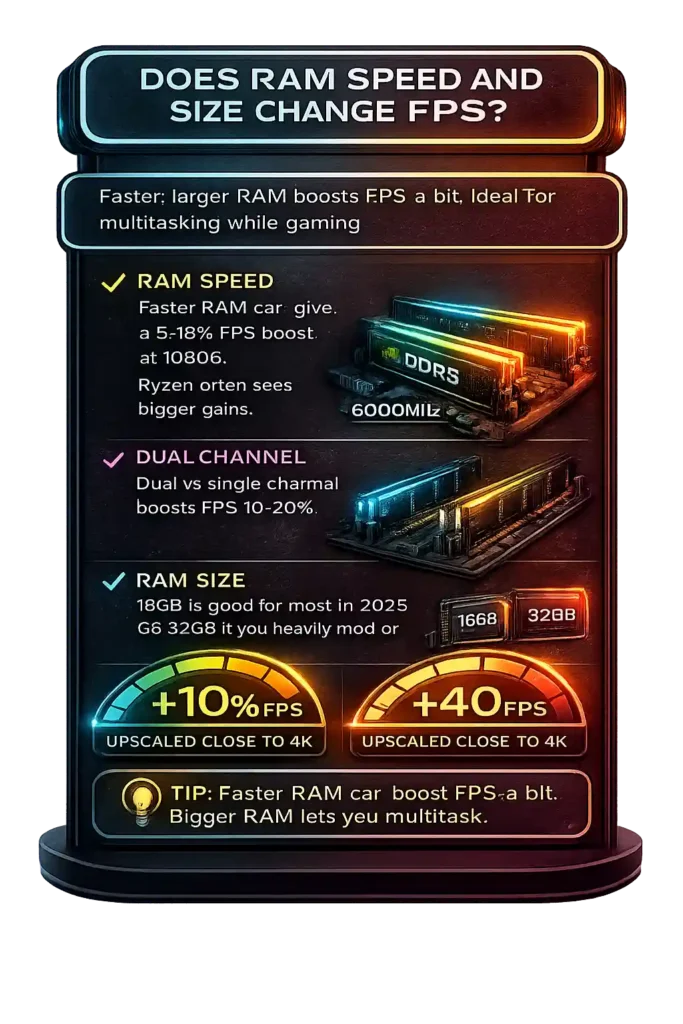


FPS Calculator Check Your Gaming FPS Before You Play Does RAM Speed And Size Change FPS. Does RAM Speed Matter For Gaming All You Need To Know Does RAM Speed Matter For Gaming . Best RAM For Gaming 2026 Capacity Speed Performance Best Ram For Gaming.webp. Does Ram Speed REALLY Matter For Gaming Benchmark 3200 V 3433 V 3600 . Does RAM Speed Impact Gaming Performance TikTok Img



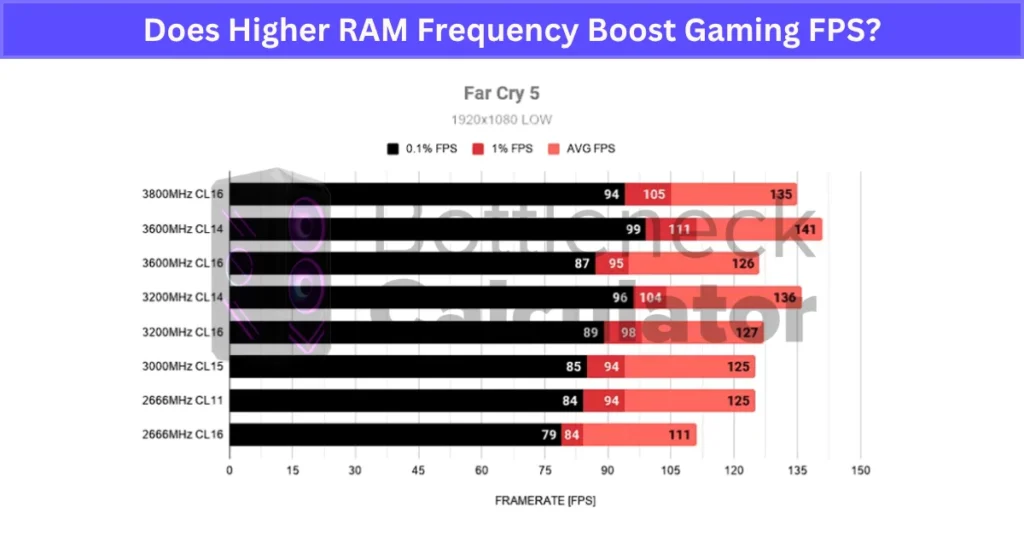
Does RAM Speed Actually Matter HYTE. Does RAM Speed Actually Matter For Gaming Fact Or Fiction YouTube . Does Speed Matter In Games DDR4 Ram Testing YouTube . What Is The Optimal RAM Speed For Gaming YouTube . RAM Speed Vs Latency Which Impacts Performance More Does Higher RAM Frequency Boost Gaming FPS

RAM Speed Vs Gaming FPS RAM Speed Tests Does It Matter For Gaming In SA 1200px V1.webp. Truth Test Does RAM Speed Matter For Gaming Performance And FPS Ram Speed Latency Gaming Fps.webp. DOES RAM SPEED MATTER FOR GAMING WARZONE FORTNITE FPS TEST 2400MHZ . RYZEN TEST Does RAM Speed Matter YouTube . RAM Speed Gaming Performance Ram Basics Speed Capacity And Timings

Does RAM Speed REALLY Matter DDR5 Edition R Amd Does Ram Speed Really Matter Ddr5 Edition V0 . Does RAM Speed Matter Images Where RAM Speed Makes A Difference . Ram Speed At John Lurie Blog Does RAM Speed Matter For Gaming Featured Image Gamer Blog . Does RAM Speed Latency Really Matter GeekaWhat FI Does RAM Speed Latency Really Matter 1024x576 . Does RAM Speed Matter For Gaming In 2021 YouTube


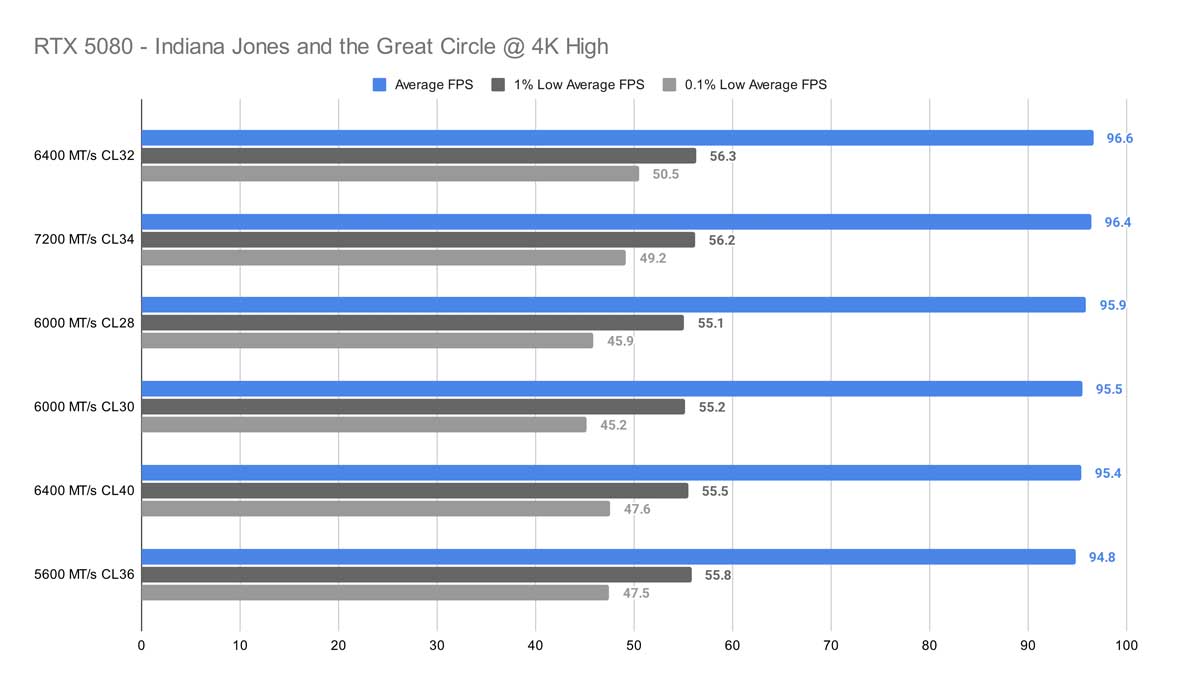
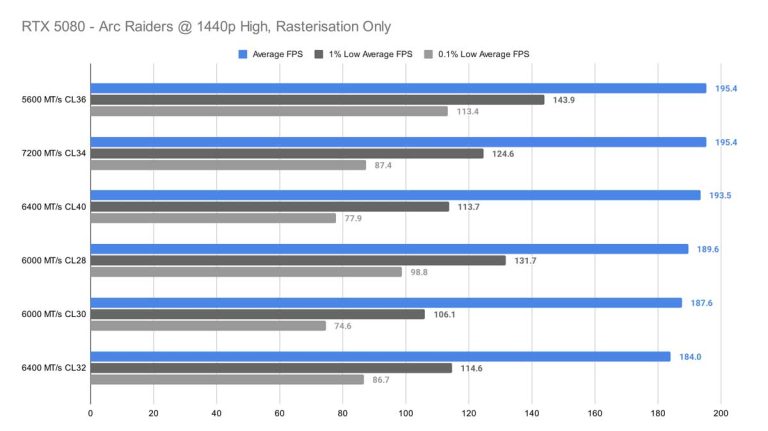
Does RAM Speed Matter Images How Is RAM Speed Measured . Does RAM Speed Matter For Gaming The Truth Explained Does RAM Speed Matter For Gaming The Truth Explained 44e0c2d8 8a32 44e4 Ab12. What S The Best RAM Speed For Gaming In 2020 Newb Computer Build Best RAM Speed For Gaming In 2020 1024x536 . Does RAM Speed Latency Really Matter GeekaWhat RTX 5080 Indiana Jones And The Great Circle @ 4K High . Does RAM Speed Latency Really Matter GeekaWhat RTX 5080 Arc Raiders @ 1440p High Only 768x431
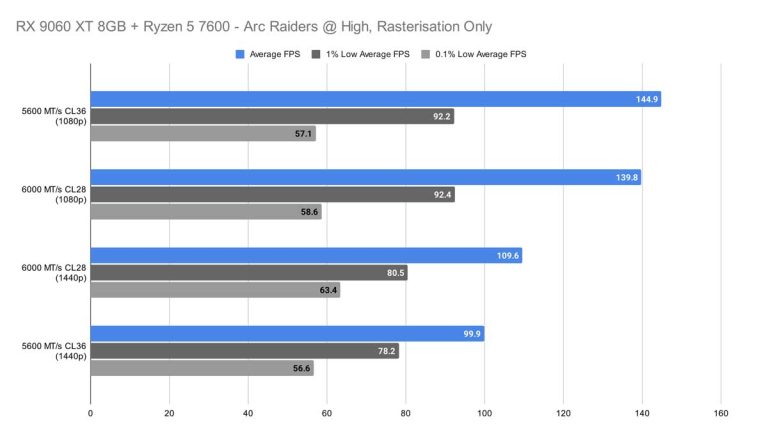


DDR5 6000 Vs DDR5 5600 Does RAM Speed Actually Matter March 2026 8 . Does RAM Speed Latency Really Matter GeekaWhat RX 9060 XT 8GB Ryzen 5 7600 Arc Raiders @ High Only 768x431 . Does RAM Speed Matter DDR4 3200 Vs 3600 Vs 4000 Performance Test Featured Image Yitjvdny . RAM Speed MHz Explained Laptop RAM Upgrade Guide RAM Speed MHz Explained - Does It Matter For Upgrades 700x366 . Does RAM Speed Matter Images DSC02060
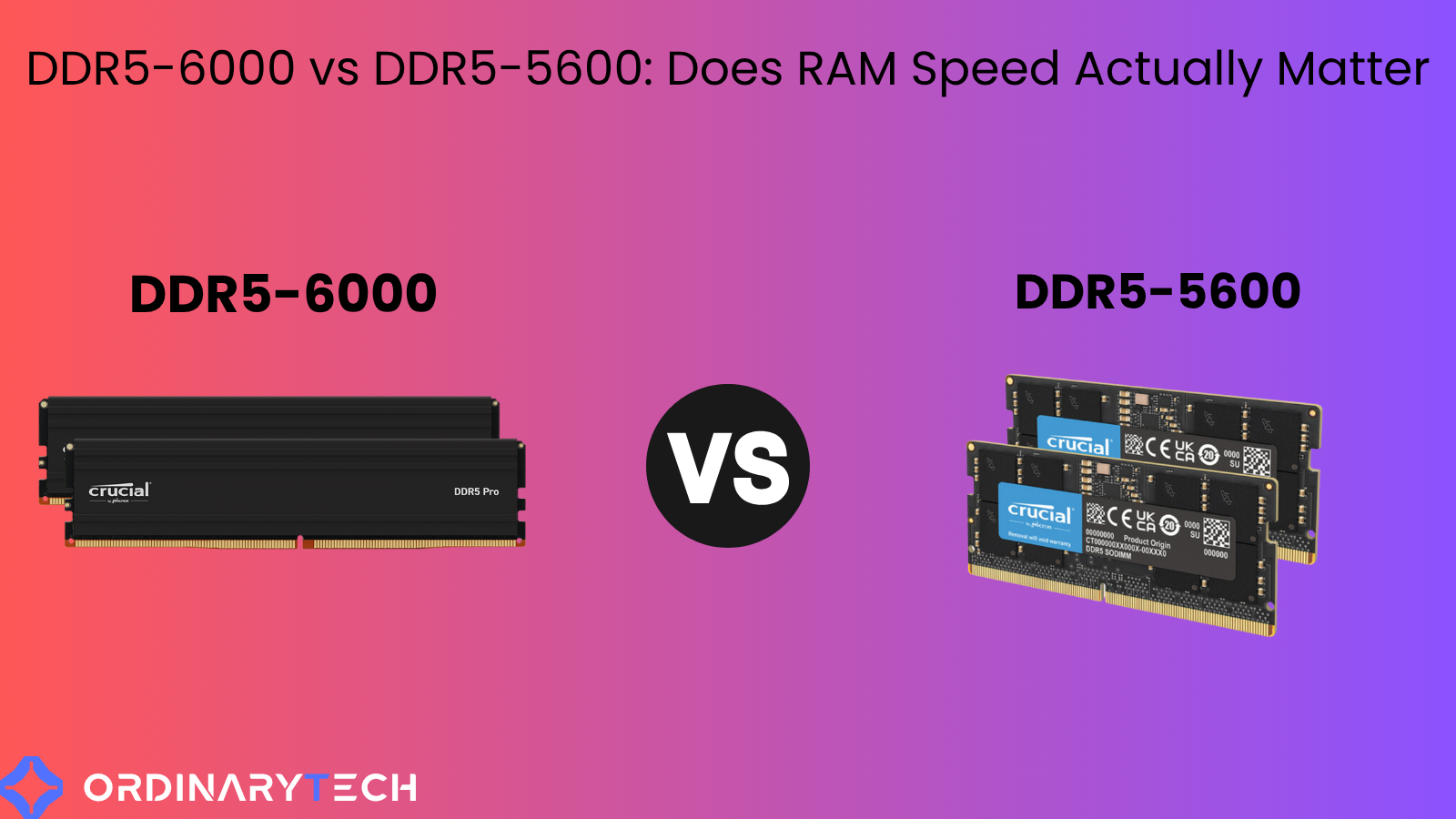


DDR5 6000 Vs DDR5 5600 Does RAM Speed Actually Matter DDR5 6000 Vs DDR5 5600 Does RAM Speed Actually Matter . Will Upgrading RAM Increase Gaming Performance Does Ram Speedclock Affect Gaming Performance . Best RAM Speed For Gaming Bottleneck Calculator Best RAM Speed For Gaming . Is It Worth Spending 330 More For 7800x3d Compared To 7600x R Buildapc . Does RAM Speed REALLY Matter Escape From Tarkov Arena Intel I7 Does Ram Speed Really Matter Escape From Tarkov Arena Intel V0 8z9wwKW